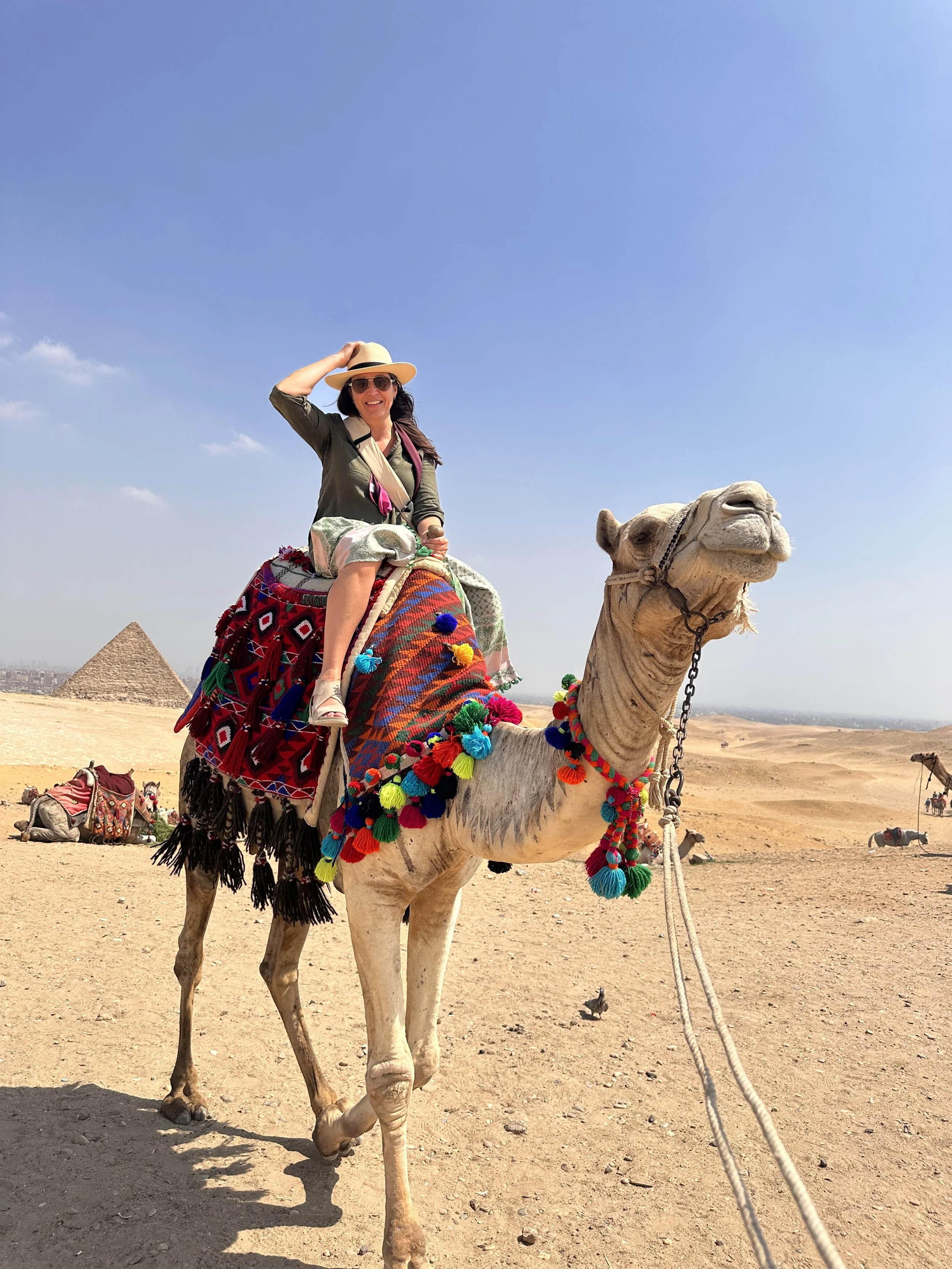
Egypt a journey through the beginnings of brilliant civilizations
A Journey Through Egypt: Cairo, the Nile and the Ancient Wonders of Luxor
Egypt had been on my travel list for years, but nothing could fully prepare me for experiencing its history, culture and archaeological treasures firsthand. From flying over the Valley of the Kings in a hot-air balloon to standing before the temples of Abu Simbel, this was truly a trip I will never forget.
Arriving in Cairo
Upon arrival in Cairo, I was met at the airport by a representative from Excel Travel. He guided me through customs, helped secure my visa and collected my luggage before I was transferred by private car to The St. Regis Cairo, where I spent the first two nights.
Throughout the trip, we were accompanied by members of the Excel Travel team and our incredible Egyptologist guide, Walid El Batouty. Having experienced local support and an expert guide made the journey seamless while adding invaluable context to everything we saw.
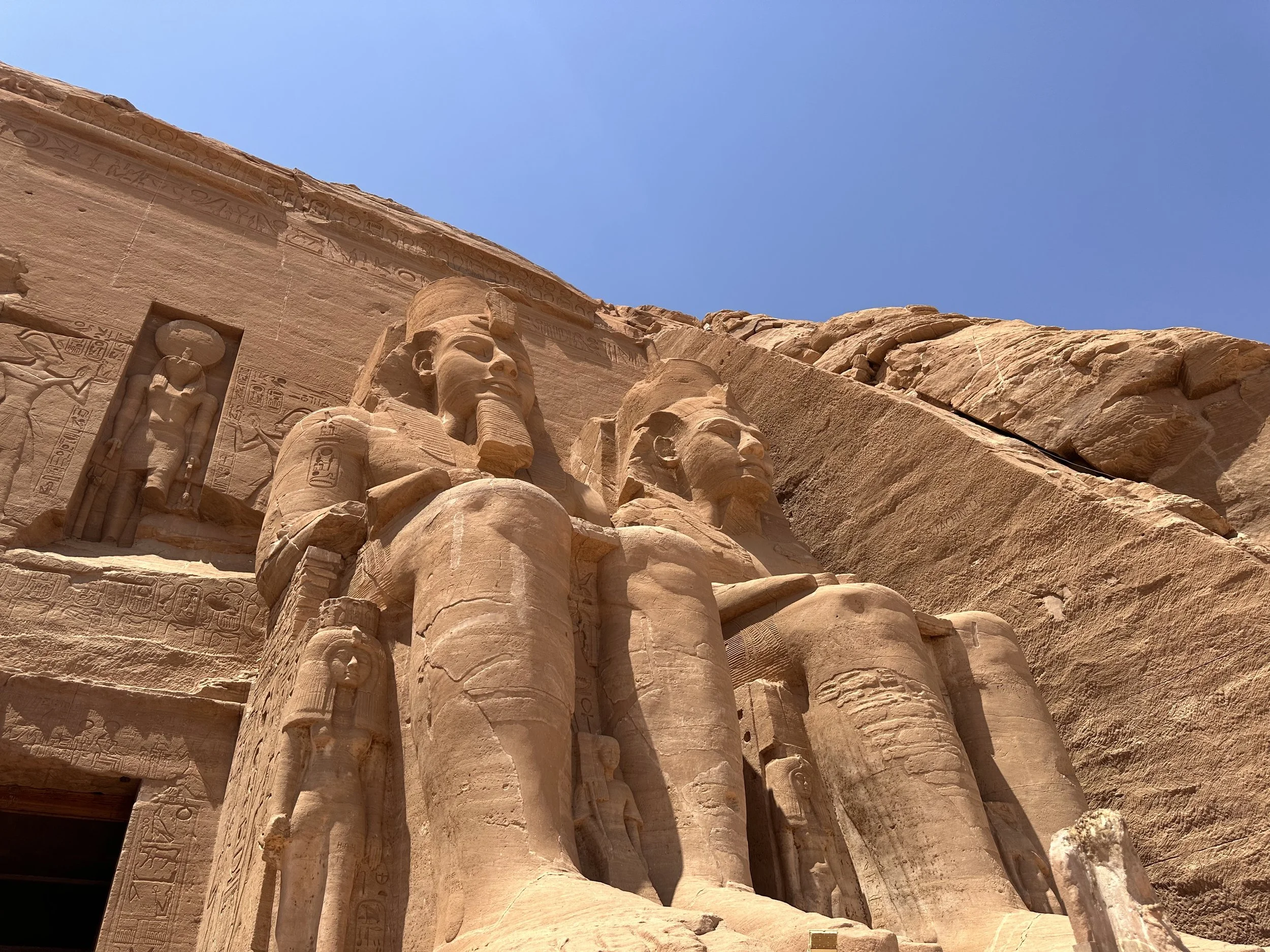
Abu Simbel
Our first full day began with flights from Cairo to Aswan and then onward to Abu Simbel. Travelers should know that reaching Abu Simbel by air generally requires connecting through Aswan. On our itinerary, the plane remained on the ground while we toured the temples before returning us to Aswan.
Located in southern Egypt near Lake Nasser, Abu Simbel is a UNESCO World Heritage Site and one of the country’s most extraordinary ancient monuments. Its monumental rock-cut temples were carved into the mountainside during the reign of Pharaoh Ramesses II in the 13th century BCE.
Just as remarkable as their construction is the story of their relocation. During the 1960s, the temples were carefully dismantled and moved to higher ground to prevent them from being submerged by the rising waters of Lake Nasser following the construction of the Aswan High Dam.
Cruising the Nile aboard Historia
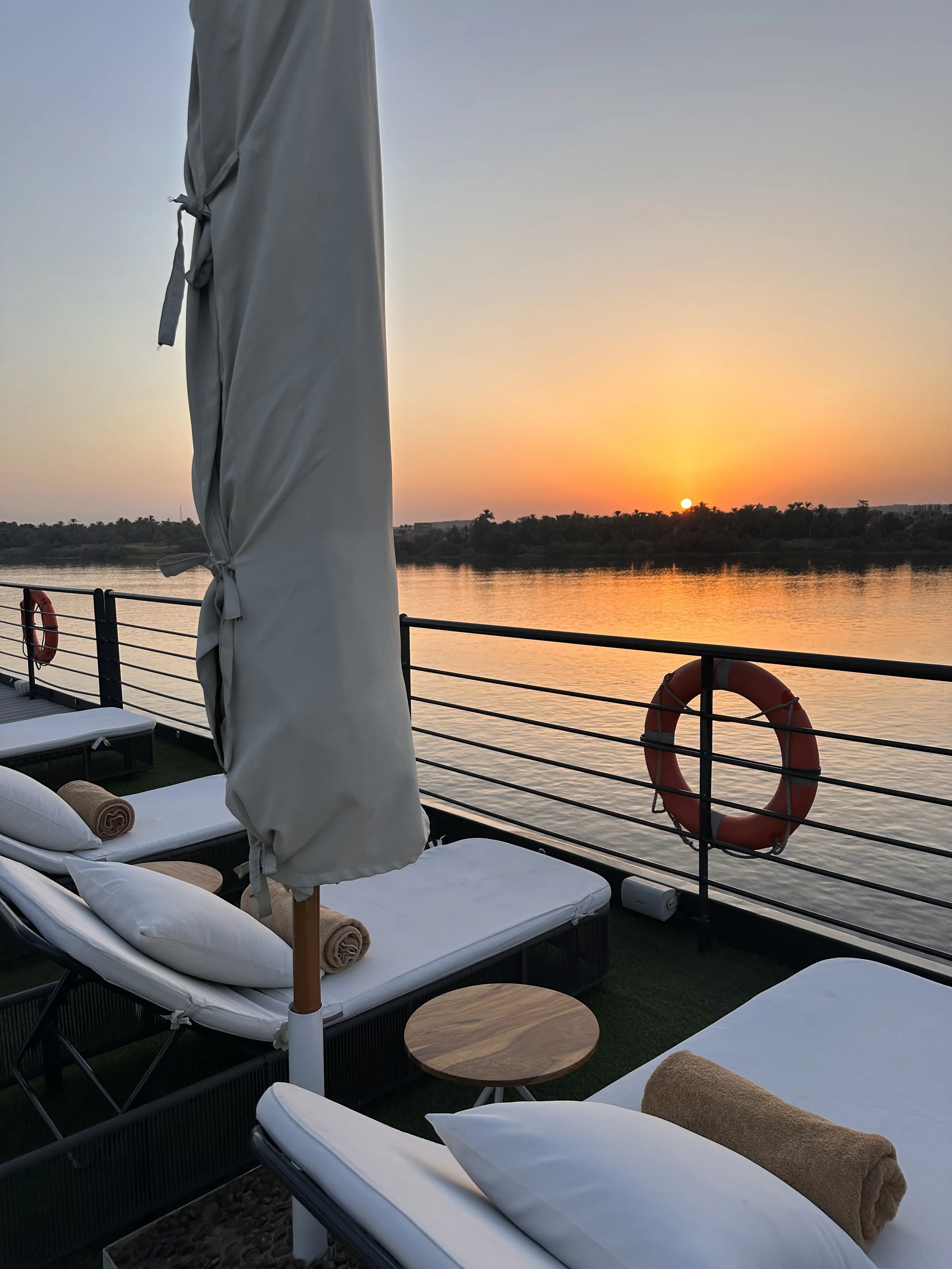
After visiting Abu Simbel, we flew back to Aswan and boarded Historia for a three-night Nile River cruise.
Historia offers a luxurious and intimate way to experience the Nile, with spacious accommodations, personalized service and upscale dining. The ship was absolutely beautiful, and the rooms were exceptionally large and well-appointed for a river vessel. The rooftop pool quickly became a favorite gathering place for our group, along with the elegant dining room.
That evening, we set sail and awoke the next morning in Kom Ombo.
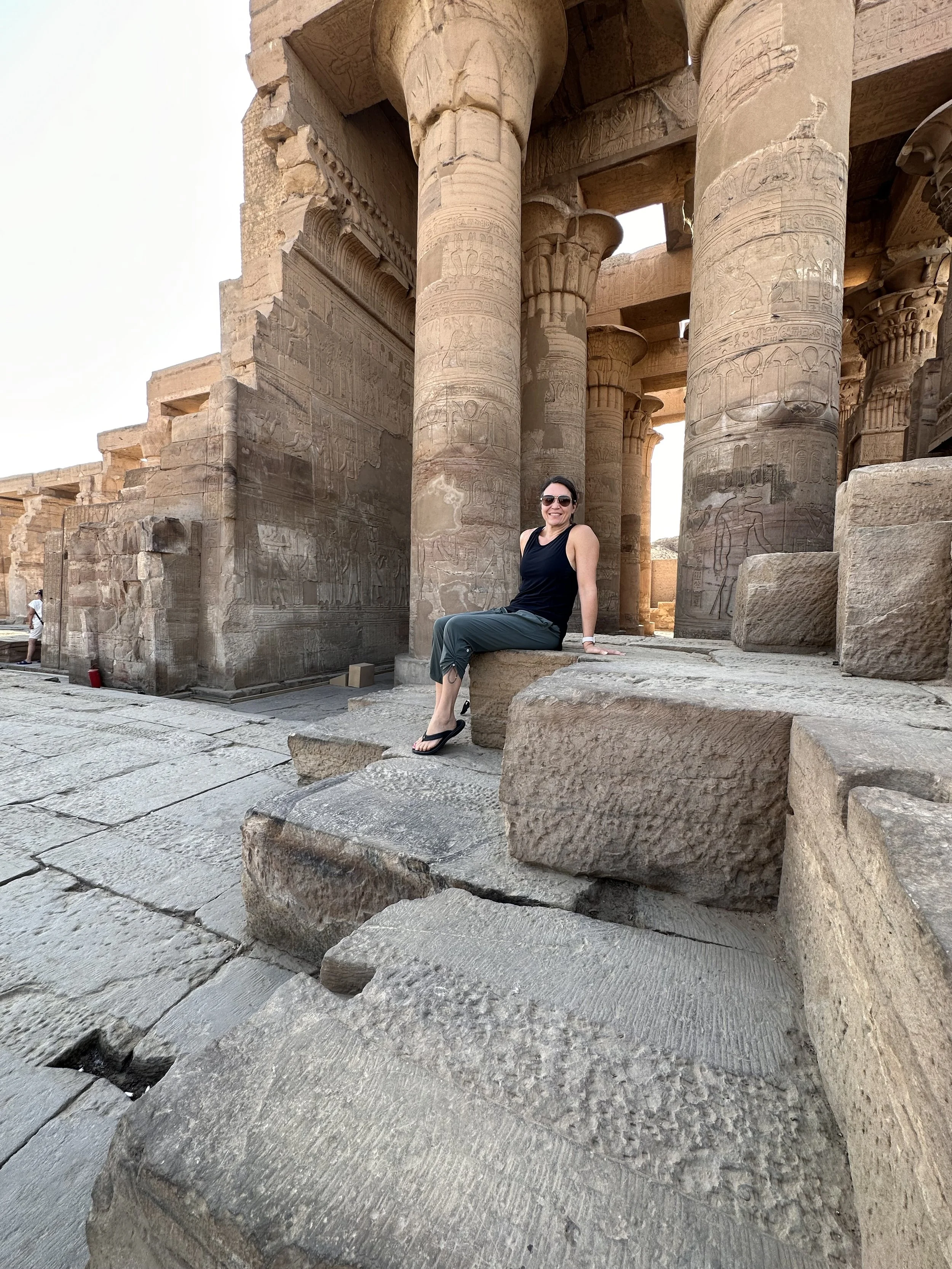
Kom Ombo and Edfu
The Temple of Kom Ombo is unusual because it is dedicated to two gods: Sobek, the crocodile god, and Horus the Elder. Its symmetrical design includes matching entrances, courtyards and halls. Inside, visitors can see remarkably preserved columns, carvings and reliefs depicting ancient Egyptian mythology and religious traditions.
After returning to Historia, we enjoyed a relaxing lunch as we sailed toward Edfu.
Located on the west bank of the Nile in Upper Egypt, the Temple of Edfu is dedicated to Horus, the falcon-headed god. Constructed during the Ptolemaic period beginning around 237 BCE, it is one of Egypt’s best-preserved ancient temples.
The complex features massive entrance pylons, towering columns and intricately decorated walls depicting religious ceremonies and scenes from Egyptian mythology. At its center is the sanctuary that once housed the sacred ceremonial boat, or barque, of Horus.
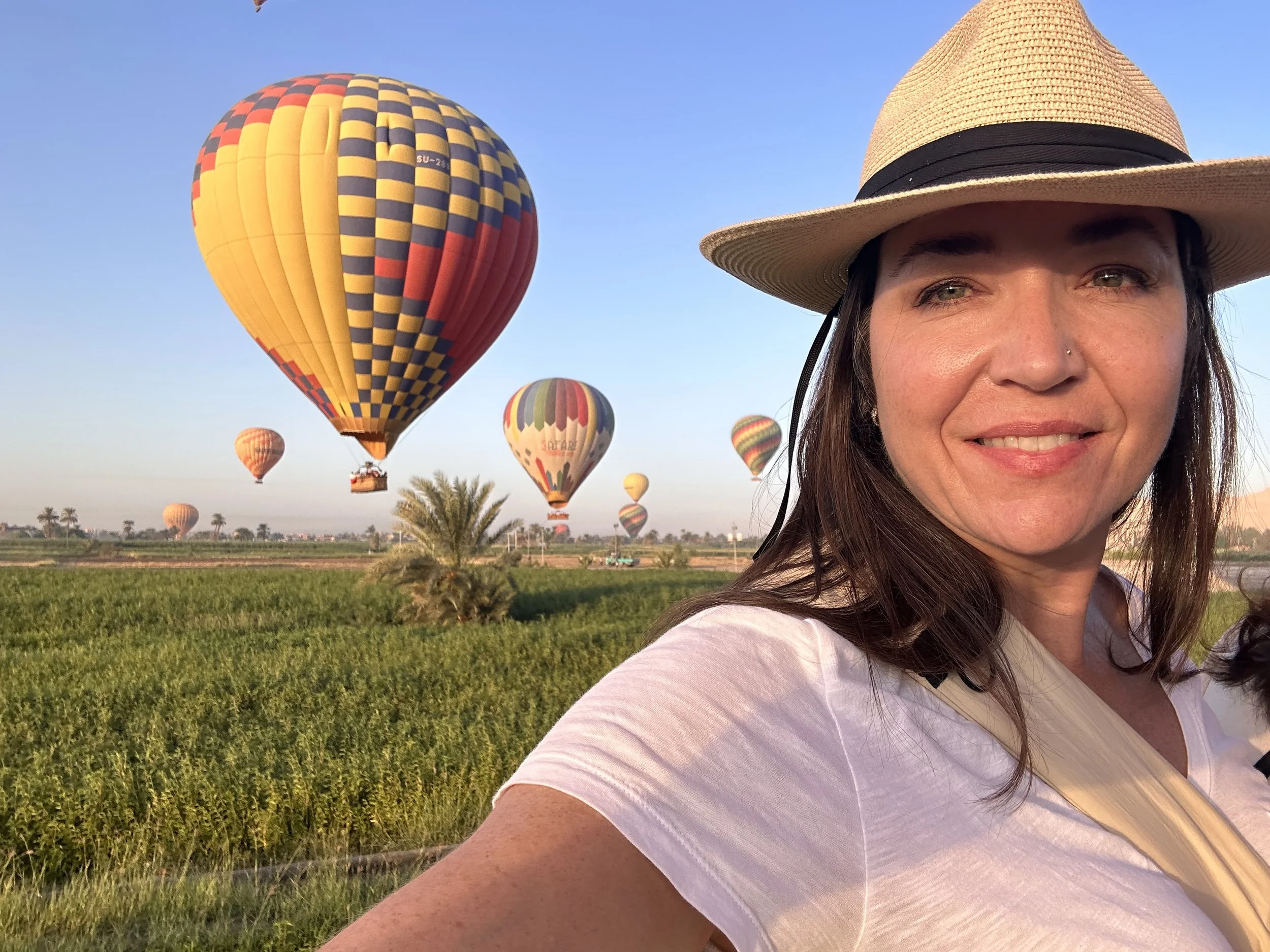
A Hot-Air Balloon Ride over Luxor
That evening, we had dinner onboard as we sailed toward Luxor. Very early the following morning, we crossed the Nile in small boats and set out for a hot-air balloon ride over the Valley of the Kings and the Valley of the Queens.
This was my first hot-air balloon ride, and it became one of the highlights of the entire trip. Watching the sun rise over the temples, tombs and desert landscape was an unforgettable experience.
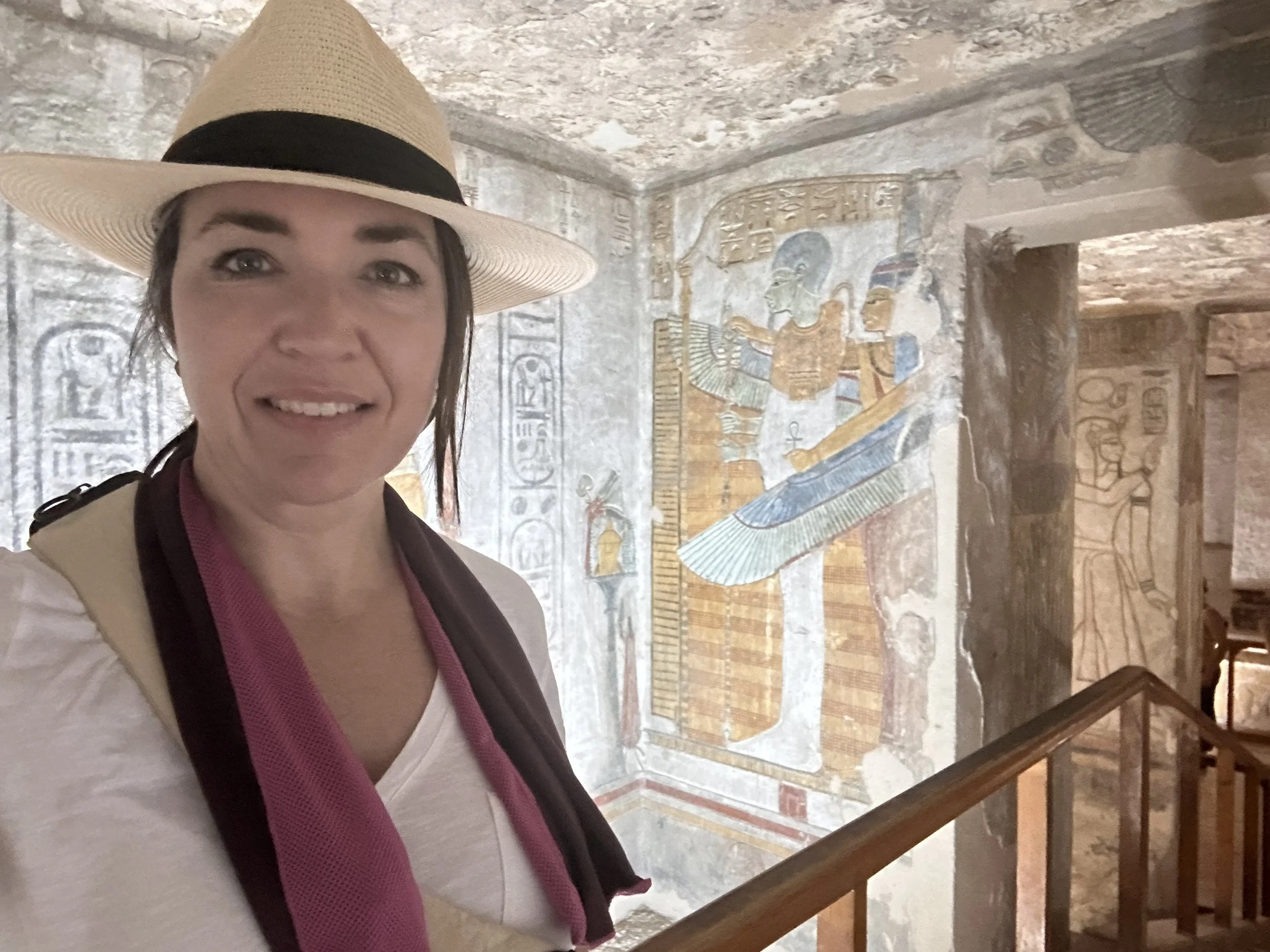
After landing, we toured the Valley of the Kings, the famous archaeological site containing more than 60 known tombs belonging to pharaohs and powerful nobles of Egypt’s New Kingdom period, approximately the 16th through 11th centuries BCE.
The tombs were cut directly into the surrounding rock and decorated with detailed paintings and carvings intended to guide the deceased into the afterlife. Some of Egypt’s most famous pharaohs—including Tutankhamun, Ramesses II and Seti I—were buried here.
Tutankhamun’s tomb was discovered by archaeologist Howard Carter in 1922 and was found largely intact. Its treasures provided historians with invaluable insight into ancient Egyptian burial practices, beliefs and daily life.
Nearby, the Valley of the Queens served as the burial place for queens, royal children and other members of the nobility. It contains approximately 90 known tombs, which are generally smaller than those in the Valley of the Kings.
Its most famous site is the Tomb of Nefertari, the favorite wife of Pharaoh Ramesses II. Known for its vibrant and exceptionally preserved artwork, it is considered one of the most beautiful tombs in Egypt.
Karnak and Luxor Temples
Our next stop was the Temple of Karnak, an enormous temple complex near Luxor. It is one of the largest religious complexes ever constructed and was primarily dedicated to Amun, along with his consort Mut and their son Khonsu.
Karnak was built and expanded over approximately 2,000 years by numerous pharaohs and rulers, including Hatshepsut, Amenhotep III and Ramesses II. The complex includes temples, chapels, pylons, obelisks and the spectacular Great Hypostyle Hall.
Other highlights include the Sacred Lake, which was likely used for ritual purification, and the Avenue of Sphinxes, a processional route that once connected Karnak with Luxor Temple.
Luxor Temple was our final stop of the day. Also dedicated to Amun, Mut and Khonsu, the temple was primarily constructed during the New Kingdom, with later pharaohs adding to and renovating the site.
It remains remarkably well preserved, with massive pylons, towering columns, obelisks and detailed carvings. It is especially beautiful after dark, when the temple is illuminated.
Returning to Cairo
Luxor marked the end of our Nile cruise, and from there we flew back to Cairo.
Upon arrival, we visited the Egyptian Museum, also known as the Museum of Egyptian Antiquities. Its enormous collection spans thousands of years of Egyptian history and includes statues, jewelry, papyrus, sarcophagi, mummies and other ancient artifacts.
We spent the final two nights of the trip at Four Seasons Hotel Cairo at Nile Plaza. The hotel was exceptional, with beautiful rooms and views overlooking either the Nile or the Cairo skyline.
Saqqara and the Pyramids of Giza
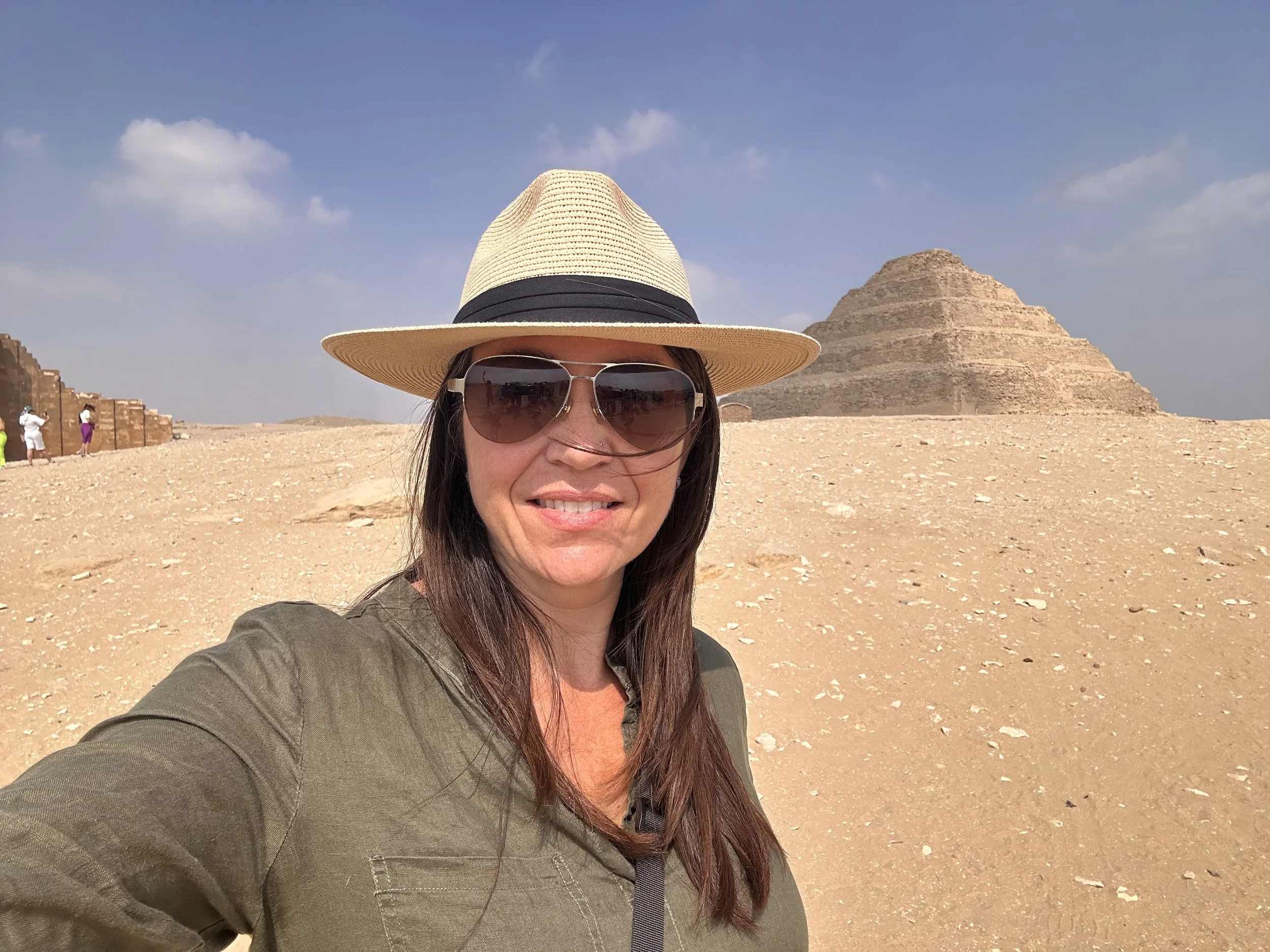
On our final full day, we visited Saqqara and the Pyramids of Giza.
Saqqara was the vast necropolis for Memphis, the ancient capital of Egypt. Its most famous monument is the Step Pyramid of Djoser, one of the earliest monumental stone structures in the world. The area also contains numerous pyramids, tombs and monuments representing different periods of ancient Egyptian history.
After touring Saqqara, we enjoyed lunch at Marriott Mena House, with an incredible view of the pyramids. We then continued to the Giza Plateau.
The Pyramids of Giza are among the most iconic structures in the world. The complex includes the Great Pyramid of Khufu, the Pyramid of Khafre and the Pyramid of Menkaure, each constructed as a tomb for its respective pharaoh.
Nearby stands the Great Sphinx of Giza, a massive limestone statue with the body of a lion and the head of a human. It is commonly believed to represent Pharaoh Khafre and remains one of the oldest and largest monumental sculptures in the world.
Standing in front of the pyramids is one of those rare travel experiences that lives up to every expectation.
What to Know Before Visiting Egypt
Here are a few practical things I learned during the trip:
Security is highly visible. Hotels and archaeological sites commonly have metal detectors and security checkpoints. We also had a police escort during our full day of touring in Cairo. It initially felt unfamiliar, but I never felt unsafe.
Clothing can be more flexible than many travelers expect. At the archaeological sites we visited, women were not required to cover their heads or shoulders. More conservative clothing is appropriate when visiting mosques and other religious sites.
Bring small bills for tipping. Small U.S. dollar bills are useful for tips and are often accepted by market vendors and for activities such as camel rides. Egyptian pounds are also helpful for smaller purchases.
English is widely spoken in tourism areas. Most of the people we encountered spoke English or knew enough to communicate with travelers.
The Egyptian people were warm and welcoming. Hospitality was one of the most memorable parts of the experience.
Be prepared to bargain. Vendors in markets and bazaars can be persistent, and negotiating is part of the shopping experience. A polite but firm “no, thank you” is useful when you are not interested.
A Trip to Remember
Egypt is a destination where history is not confined to a museum—it surrounds you at every turn. From sailing the Nile and exploring ancient temples to flying over Luxor and standing beneath the pyramids, each day revealed another layer of this remarkable country.
Even after everything we experienced, I felt as though we had only scratched the surface of Egypt’s history and archaeological treasures. It was truly the trip of a lifetime and a destination I will remember forever.